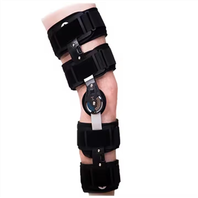
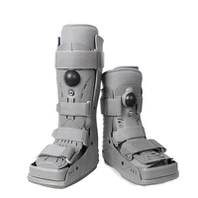
For decades,plaster and fiberglass casts have been the standard for immobilizing broken bones and injured limbs.However,with the development of high-quality materials and technology,modern medical rehabilitation braces are increasingly becoming the preferred choice for doctors and patients.These advanced supports offer adjustable stabilization,improved comfort, and faster recovery-advantages that rigid casts simply cannot match.
This article explores the key reasons why orthopedic braces are replacing traditional casting methods in fracture care and injury recovery.
1. Better Comfort & Hygiene
Traditional casts are bulky,non-breathable and cannot be removed for cleaning. This often leads to skin irritation and itching,unpleasant odors from trapped moisture,higher risk of infections etc.
In contrast,rehabilitation braces could prevent patients from that problems traditional casts bring.Patients report significantly higher comfort levels,especially during long-term wear.
The rehabilitation braces features are as below:
- Breathable materials (neoprene, mesh) to reduce sweating
- Removable designs for easy cleaning and wound checks
- Adjustable straps to prevent excessive pressure
2. Controlled Mobility for Faster Healing
Plaster casts completely immobilize the injured area,which can lead to muscle atrophy,stiff joints after cast removal and longer rehabilitation periods.
Howecer,modern orthopedic supports allow:
- Gradual movement to prevent stiffness
- Adjustable stabilization
- Targeted compression to reduce swelling
Studies show that controlled motion during recovery helps bones heal stronger and reduces rehabilitation time.
3. Lightweight & Convenient Design
Traditional casts are heavy and limit daily activities.Medical braces, however, offer lightweight materials,slimmer profiles and
modular designs.
This makes them ideal for:
- Active individuals who need to stay mobile
- Elderly patients who require easier movement
- Children who find rigid casts uncomfortable
4. Improved Monitoring & Adjustability
One major drawback of plaster casts is that they cannot be adjusted once applied.If swelling increases or decreases,the cast may become too tight or too loose,requiring replacement.
Rehabilitation braces solve this with:
- Adjustable straps or air chambers for customized fit
- Removable panels for medical inspections
- Interchangeable parts to adapt to healing progress
Doctors can easily modify support levels without replacing the entire brace.
5. Versatility for Different Injuries
While casts are mostly used for fractures,medical braces can treat a wider range of conditions,including Ankle sprains & ligament tears,Post-surgical recovery,Chronic conditions etc.
Some braces even incorporate smart sensors to track healing progress-a feature impossible with traditional casts.
Medical rehabilitation braces provide superior comfort,faster recovery,and greater flexibility compared to old-fashioned cast.As technology advances,these supports are becoming the new standard in orthopedic care.