Orthopedic Product Sourcing Guide
How to Select a Hip Knee Ankle Foot Orthosis for Your Product Range
For orthopedic distributors, rehabilitation suppliers, and private-label brands, choosing a hip knee ankle foot orthosis (HKAFO) involves more than comparing product prices. Buyers need to evaluate the support structure, adjustment mechanisms, fitting options, product documentation, and suitability for their target market.
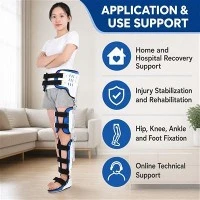
The BOSEGROW HS-002 Hip Knee Ankle Foot Orthosis combines a full-length lower-limb support frame with adjustable mechanical joints, length adjustment components, multiple hook-and-loop straps, and perforated padding. Its integrated design makes it an option for buyers developing a more specialized orthopedic and rehabilitation product range.
For purchasing teams, the key question is whether the product configuration, fitting requirements, and supply arrangements match the needs of their intended customers.

HS-002 Hip Knee Ankle Foot Orthosis - full-length lower-limb support design.
1. HS-002 at a Glance: Key Details for Buyers
Before requesting samples or a quotation, purchasing teams should understand the product's basic configuration and identify any market-specific requirements.
| Item | Product Information |
|---|---|
| Model | HS-002 |
| Product type | Hip Knee Ankle Foot Orthosis (HKAFO) |
| Support coverage | Hip, thigh, knee, lower leg, ankle, and foot |
| Adjustment system | Length adjustment and mechanical joint angle adjustment |
| Fixation | Multiple adjustable hook-and-loop straps |
| Support structure | Thermoplastic casing with mechanical components |
| Contact padding | Perforated blue padding |
| Foot options | Left and right versions available |
| OEM / private label | Logo, packaging, and instruction manual customization can be discussed |
Purchasing note: Confirm the available fitting range, adjustment increments, detailed dimensions, left/right configuration, and current order requirements with the supplier before finalizing specifications.
2. What Should Distributors Evaluate in an HKAFO?
An HKAFO supports multiple sections of the lower limb within one integrated orthotic system. For buyers, the following design features are especially relevant when comparing suppliers and preparing a product specification.

A. Integrated Support from Hip to Foot
The full-length frame connects the hip, thigh, knee, lower leg, ankle, and foot sections. Compared with a brace designed for only one joint, this configuration addresses support and positioning requirements across multiple lower-limb regions.
B. Adjustable Length and Mechanical Joints
Length adjustment helps accommodate different fitting requirements, while the mechanical joints allow positioning adjustments within the product's available settings. Buyers should request the actual adjustment range and joint-setting instructions to assess suitability for their intended applications.
C. Multiple Fixation Straps
The hook-and-loop strap system allows the brace to be secured at multiple points. When evaluating samples, check strap placement, fastening strength, ease of adjustment, and the consistency of the finished assembly.
D. Padding and Contact Comfort
Perforated blue padding provides a ventilated contact surface. For a product intended for repeated fitting and adjustment, buyers should assess padding attachment, surface finish, cleaning instructions, and comfort under the intended conditions of use.
E. Frame and Component Consistency
The thermoplastic casing and mechanical components form the main support structure. During sample evaluation, inspect joint movement, component alignment, strap attachment points, and the finish of edges and contact surfaces.
3. Is HS-002 a Suitable Addition to Your Product Range?
Because an HKAFO is a specialized, full-length orthosis, it serves a different role from everyday knee sleeves, standard hinged knee braces, and ankle-foot orthoses (AFOs). Its commercial fit depends on the needs of the buyer's existing customer base and the level of fitting support available in the sales channel.
| Buyer Type | Potential Product Fit | What to Check |
|---|---|---|
| Orthopedic distributors | Adds a specialized full-length orthosis to an existing brace portfolio. | Product differentiation, fitting range, and local demand. |
| Rehabilitation suppliers | Supports a product range serving lower-limb positioning and rehabilitation needs. | Adjustment instructions, fitting workflow, and user guidance. |
| Hospital suppliers | May fit purchasing programs requiring specialized orthopedic support products. | Tender specifications, documentation, labeling, and applicable regulations. |
| Private-label brands | Provides a basis for developing a branded HKAFO offering. | Logo placement, packaging, instructions, and customization scope. |
A practical assortment-planning tip
If your current range already includes knee braces and AFOs, an HKAFO may help address a more specialized segment of lower-limb orthotic needs. Before adding it, compare customer demand, fitting complexity, purchasing budget, and after-sales support requirements. A broader catalog is useful only when each product has a clear role in your market.
4. HKAFO vs. KAFO vs. AFO: Which Product Do You Need?
These orthoses differ mainly in the anatomical areas they support. Understanding this distinction helps distributors avoid comparing products that serve different requirements.
| Orthosis Type | Typical Support Coverage | Buyer Consideration |
|---|---|---|
| HKAFO | Hip, thigh, knee, lower leg, ankle, and foot. | For applications requiring a full-length lower-limb orthotic structure. |
| KAFO | Knee, lower leg, ankle, and foot. | For applications requiring knee and lower-limb support without the same hip-support configuration. |
| AFO | Ankle and foot. | For more localized ankle-foot support requirements. |
Product selection should be based on the prescribed support requirements and intended use. These categories are not interchangeable, and a clinician or qualified orthotics professional should determine the appropriate configuration for an individual user.
5. HKAFO Procurement Checklist: What to Confirm Before Ordering
For importers and wholesalers, product specifications are only one part of the purchasing decision. Confirm the following details before approving samples or placing a bulk order.
For a specialized orthosis, it is also useful to agree on the approved sample, inspection criteria, packaging artwork, and documentation before mass production. This gives both parties a clearer reference for quality checks and repeat orders.
6. OEM and Private-Label Support for Orthopedic Buyers

For distributors and brands building their own orthopedic product lines, HS-002 can be discussed as part of an OEM or private-label project. The objective is to align the product presentation and supply requirements with the buyer's market, rather than treating each order as an isolated purchase.
- Logo application and brand presentation.
- Retail packaging and carton labeling.
- Instruction manual language and localization.
- Product detail adjustments, subject to technical review.
- Sample confirmation and agreed production specifications.
The availability, cost, and lead time of each customization should be confirmed individually. For private-label projects, buyers should also establish who is responsible for final artwork approval, market-specific labeling, and any required regulatory review.
7. How to Evaluate an HKAFO Manufacturer
A competitive quotation matters, but buyers should also evaluate whether the supplier can consistently reproduce the agreed product configuration and support the order documentation process.
- Specification control: Can the supplier confirm the exact model, configuration, components, and approved sample?
- Assembly quality: Are mechanical joints, straps, casing, and padding checked during production and before packing?
- Repeat-order consistency: Can the supplier maintain the agreed materials, appearance, labeling, and packaging requirements?
- Documentation support: Can the supplier provide applicable product-specific documents and help prepare packaging and labeling information?
- Communication: Are sample feedback, specification changes, lead times, and order requirements clearly documented?
BOSEGROW supports orthopedic product buyers with OEM/ODM coordination, sample confirmation, production quality checks, and packaging and labeling support. Buyers should confirm the specific inspection plan, documentation, and delivery terms for HS-002 when requesting a quotation.
8. Frequently Asked Questions About Hip Knee Ankle Foot Orthoses
What is a hip knee ankle foot orthosis used for?
An HKAFO is an orthotic device designed to provide external support and positioning across the hip and multiple lower-limb regions. Its intended use and adjustment settings should be determined according to the individual's clinical requirements and professional guidance.
What is the difference between an HKAFO and a KAFO?
An HKAFO includes a hip-support component in addition to support for the knee, lower leg, ankle, and foot. A KAFO generally supports the knee, lower leg, ankle, and foot without the same hip-support configuration.
Can the HS-002 HKAFO be adjusted?
Yes. HS-002 incorporates length adjustment components and mechanical joints for positioning adjustments. Buyers should request the detailed adjustment range and instructions before confirming the product specification.
Are left and right versions available?
The product listing identifies left and right foot options. Confirm the exact side configuration, available fitting range, and ordering method with BOSEGROW before placing an order.
Can the HS-002 be supplied under a private label?
OEM and private-label options can be discussed, including logo application, packaging, and instruction manual localization. Final customization scope, MOQ, and lead time depend on the project requirements and should be confirmed in the quotation.
What information should I provide when requesting a wholesale quotation?
Provide your destination market, estimated order quantity, required configuration, left/right requirements, packaging and branding needs, and any applicable documentation requirements. These details help the supplier prepare a more relevant quotation.
Looking for an HKAFO Supplier for Your Next Orthopedic Product Project?
Share your target market, estimated order quantity, fitting requirements, and private-label needs with BOSEGROW. Our team can help you review the HS-002 configuration, discuss sample arrangements, and confirm pricing and customization options.
View HS-002 Product Details Contact BOSEGROW
OEM / ODM · Sample Evaluation · Wholesale Supply · Private Label
Product selection and fitting should follow the intended use, product instructions, and advice of a qualified healthcare or orthotics professional. Product specifications, adjustment ranges, documentation, and market-specific compliance requirements should be confirmed with the supplier before purchase.