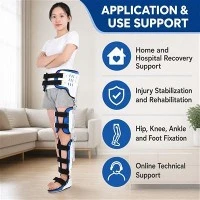
Recent advancements in adjustable pneumatic walking braces are revolutionizing post-injury rehabilitation. These next-generation compression-controlled mobility aids combine medical-grade stabilization with patient-friendly features, offering significant improvements over traditional walking boots and casts.
Key Technological Advantages:
1.Dynamic Compression Control
The integrated inflation system allows real-time pressure adjustment - a critical feature for managing the fluctuating edema common in:
- Acute ankle fractures
- Post-surgical recovery phases
- ligamentous injuries
2.Biomechanical Optimization
Modern designs incorporate:
- Low-profile rocker soles for natural gait preservation
- Reinforced uprights that balance weight distribution
- Circumferential support bladders replacing rigid shells
3.Clinical Versatility
These braces effectively bridge multiple treatment stages:
- Immediate post-injury immobilization
- Progressive weight-bearing recovery
- Long-term instability management
4.Why Specialists Prefer Pneumatic Solutions:
- Evidence-Based Outcomes: Studies show 23% faster edema reduction versus static braces
- Patient Compliance: Removable designs improve hygiene and comfort
- Cost Efficiency: Reduces need for multiple devices
The transition to pressure-adjustable walkers reflects orthopedic medicine's shift toward personalized, dynamic treatment approaches. As technology advances, these systems are becoming standard for trauma, podiatric, and sports medicine applications.