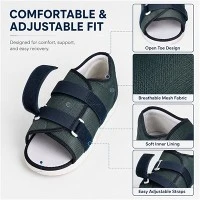
A brace is ultimately an external support device worn on the outside of the torso or limbs to restrict all or part of movement. Therefore, a qualified brace must be cross jointed. On this basis, if pressure can be applied in a specific direction, it is called an "orthopedic brace". Under what circumstances is it necessary to use braces? All situations that require restriction of movement require the use of braces, with the most commonly used being the following: 1. Inflammation such as tenosynovitis, synovitis, fasciitis, etc. Inflammation is caused by excessive movement of the limbs, so the first principle of treatment is to avoid continuing to move. At this time, braces can help us fix the limbs at both ends of the joint, allowing them to "obediently" stay still, and the inflammation will naturally ease. Since external injuries are 'injuries', they need to be' healed '. For example, wearing braces when muscle strains can restrict muscle contraction, allowing them to rest and recover; For example, after a fracture occurs, if the degree of fragmentation is not high and the displacement between the fracture ends is not severe, the brace can fix the two ends of the fracture. On the one hand, it can avoid the severe pain caused by collision and friction between the fracture ends, and on the other hand, it can also create stable conditions for fracture healing. This is the same principle as using gypsum, but the difference is that compared to gypsum, braces are lighter, more breathable, and more comfortable. In addition, due to the early swelling of the limbs after a fracture, the swelling will gradually decrease after 72 hours, and the plaster will loosen. Therefore, the plaster needs to be replaced by a professional doctor, and the brace can be adjusted at any time, which is more convenient. 3. Postoperative surgery is essentially a form of trauma, and inevitable damage to the skin and muscles can lead to local inflammatory reactions. Braces can help alleviate pain and promote recovery; In addition, the early stages after fracture or tendon repair are relatively fragile, and improper exercise can easily lead to further injury. Therefore, wearing braces before healing to sufficient strength can provide good protection. How long does the brace need to be worn? Different due to illness. If it is inflammation, usually wearing it for 3 weeks is sufficient; bone
Folding usually takes about 4 weeks, but for children who grow faster, it can be reduced to 3 weeks. In cases of advanced age, poor nutritional status, severe osteoporosis, etc., the fixation time should be appropriately extended; Scars can form about three weeks after tendon suturing, but this is also the most likely time for re rupture, so it usually needs to be fixed for six weeks; Rotator cuff tear requires healing of the tendon and bone on the humeral head, and also requires wearing for 6 weeks; After cruciate ligament reconstruction, the tendon strength gradually decreases due to ischemia, reaching its lowest point at 8 weeks after surgery, and then gradually strengthening and stabilizing. Therefore, braces need to be worn for the first 3 months after cruciate ligament reconstruction.
2. Will there be any complications when wearing braces? Wearing braces according to medical advice generally does not cause adverse consequences, but attention should still be paid to avoiding the following two points: too tight fixation: If braces are worn too tightly, it will affect blood flow back to the limbs, causing swelling in the distal limbs of the braces. If the compression cannot be relieved in time, tissue edema will continue to worsen, ultimately leading to necrosis of muscles, blood vessels, and nerves. This is a very serious complication, so if there is severe discomfort such as limb swelling, pain, numbness, and decreased limb temperature during the wearing process, the brace should be removed as soon as possible and medical attention should be sought. Excessive fixation time: Prolonged fixation beyond normal time can lead to disuse atrophy of muscles. It is generally believed that muscles will experience atrophy symptoms as long as they are inactive for a week. Therefore, it is normal for some muscle atrophy to occur after removing braces, and it can be fully recovered through appropriate training. But the longer the fixed time, the more severe the muscle atrophy, the longer the rehabilitation training needs, and the worse the effect, so it is not necessarily better to fix for a longer time. In addition, prolonged fixation of joints can also lead to adhesions within the joints, affecting their functional mobility. Generally, fixation within 6 weeks does not cause significant joint adhesions, but if it exceeds 8 weeks, it can easily occur. Mild joint stiffness can be restored through active rehabilitation training, while severe cases can only be cured by manual or surgical release. Do braces need to be used after joint replacement surgery? In the past, joint replacement was considered a major surgery, and patients were relatively weak in the early postoperative period, with obvious pain during recovery, requiring the use of a four point support walker to help patients walk. But currently, our department's hip and knee joint replacements are performed using minimally invasive methods, maximizing the preservation of muscle integrity with minimal bleeding and damage. Therefore, the overall condition and muscle strength of patients after surgery will not be greatly affected; In addition, the pain management mode adopts multi-mode analgesia,
Most patients can achieve "complete painlessness", so more and more cases in our department have confirmed that walking aids are not necessarily needed after hip and knee replacement surgery. However, based on specific circumstances, it is still necessary to use walking aids for 1 to 3 weeks in the early postoperative period to prevent falls for patients who are elderly, have more underlying diseases, and have poor physical conditions.
[Product Name]: Adjustable Fixed Support [Product Model]: Adjustable Knee Joint Fixed Support [Product Structure and Performance]: Mainly made of aluminum alloy plate, the fixed frame, fixed strap, joint adjuster, adjustment button, sponge pad, shoe sole, nylon strap, artificial leather, plastic plate, rivet, and buckle are processed and made. Reusable. 【 Scope of application 】: 1. Mainly suitable for fractures, sprains, dislocations, contractures, deformations, and ligament loosening around the knee joint. 2. Injury to the medial and lateral ligaments, as well as the cruciate ligament. 3. Rehabilitation and fixation after leg fracture surgery. [Product Features] 1. Xinshi carbon fiber chuck, high strength, light weight, high temperature resistance, and corrosion resistance. 2. Detachable inflatable airbags enhance the comfort and stability of the lumbar joints. 3. Detachable velvet padding, breathable and comfortable, easy to clean. 【 Usage 】: First, select the appropriate support according to the patient's fracture or dislocation site, and then open the adhesive buckle of the selected support. After resetting the patient's dislocation or fracture site, add gauze or medical cotton paper to the support, and then tighten the adhesive buckle. Please use it under the guidance of a professional doctor. 【 Precautions 】 1. Regularly check whether all parts of the support are secure and whether the support is safe and reliable. If any problems are found, they should be repaired and replaced in a timely manner. 2. The degree of tightness of the brace fixation depends on the needs of the condition. 3. Fixed time should follow medical advice. 4. If you experience pain or abnormal sensation during use, please stop using immediately. 【 Contraindications 】: Please follow the doctor's advice. [Maintenance and Cleaning Methods]
1. After use, it should be cleaned thoroughly and stored in a ventilated and dry place to prevent direct sunlight exposure. 2. When cleaning, first use a brush dipped in detergent or sodium hypochlorite solution to wash, then rinse with clean water and let it dry naturally. Disinfectant water that corrodes aluminum alloys is prohibited. 【 Storage Method 】: It should be stored in a dry and well ventilated room, not mixed with corrosive substances such as acid and alkali, and kept away from sources of fire. Suggestions on the selection of knee joint fixation braces A