Postoperative rehabilitation program for elbow joint fracture: 1. Acute swelling phase (injury/2 weeks after surgery)
The most important thing at this stage is to control swelling and reduce inflammatory reactions.
Anecdotes: I remember three years ago in an orthopedic rehabilitation class, a professor said during class that "swelling is the main culprit causing joint stiffness". This sentence is deeply imprinted in my mind and also the biggest gain I gained from attending that study class. At that time, she recommended purchasing cryobuf f-cold compress compression sleeves (including sleeves for various joints and limbs) with conditions. The first thing I did when I returned to Shanghai was to purchase this set of equipment.
Injury and/or acute bleeding after surgery can cause significant tissue swelling. Swelling can cause scar formation and adhesion. So we need to pay attention to cold compress and pressure bandaging during the acute phase. Our usual practice is to provide cryobuf treatment to patients within 2 days after surgery. For eliminating swelling, of course, it also includes the most basic step of raising the affected limb. Other effective measures, everyone can provide their methods or opinions.
The management of pain is also important. It can maximize the patient's participation in the treatment process. Medications or TENS?
Based on the stability of internal fixation, as long as the surgeon permits, ROM treatment should be started as early as possible, emphasizing regular training and AROM exercises.
2. Inflammatory phase (2-6 weeks after injury/surgery)
The main feature of this stage is the appearance of a large amount of hypertrophic and disordered scar tissue. This type of hyperplasia is more active and scar tissue also has good extensibility. We need to make good use of the extensibility of scars at this stage and intervene with our treatment measures to achieve the maximum possible joint range of motion.
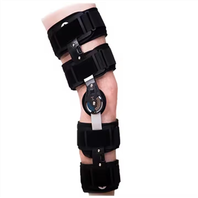
If passive movement of the entire joint range of motion is allowed, the focus of treatment is "self passive stretching", combined with the use of weight traction and dynamic/static progressive braces. The use of supports at this stage is the most effective means of obtaining ROM.
Unfortunately, there are too few patients who are able to use professional dynamic or static traction devices. The reason for this is not only the high cost of imported braces and the scarcity of domestic braces, but also the lack of ideas and knowledge among orthopedic surgeons and rehabilitation workers in this area. This is also why I personally feel that there is such a big gap between the final results of our distal humeral surgery patients and those reported by OTA in the United States (75% excellent rate, with the standard for excellent rate being 15 ° -140 °). The biggest gap between us is in the area of braces. Without braces, the effects we achieve during our limited treatment time each day cannot be sustained. Because for ROM training, the most common phrase is' exchange time for space '
For the training of elbow joint ROM, it is generally recognized that flexion is easier to recover, usually 2-3 months after surgery, while extension recovery is slower, usually taking 4-6 months or even longer. Consistent with the advice of foreign scholars, we often recommend patients to practice stretching before bedtime and then wear elbow extension braces at night. The next morning, we will practice the range of motion for flexion. When swelling begins to subside, we can perform moist heat therapy before ROM practice or wearing braces. The most commonly used method is hotpack, and wax therapy can also be used if this condition is not met.
Even if HO is found on the flat film, I agree with the opinions of foreign scholars to continue practicing ROM.
Our rehabilitation goal is to achieve elbow joint functional ROM of 100 ° (30 °, 130 °), which can enable patients to complete over 90% of their daily movements.
Strength training cannot be ignored. This is also the active rehabilitation that everyone emphasizes now. Strength training can not only restore muscle strength, but also maximize the improvement of ROM. In addition, patients should be encouraged to use their affected limbs more in ADL.
Background information: As is well known, joint contracture and muscle weakness are the two fundamental issues in orthopedic rehabilitation research. As soon as I started working in this field, I searched for new developments in joint contractures internationally and discovered that in the 1990s, an American physician proposed the concept of static progressive strain (SPS) and successfully developed SPS braces. That is to say, static progressive tiling mentioned in the article. Unfortunately, there is also a significant gap between the domestic support industry and that of foreign countries. I once tried to purchase from Hong Kong, but the equipment manufacturer's purchase price for an elbow joint SPS brace was around RMB 8000, which is obviously not suitable for China's national conditions. Fortunately, I later borrowed the Biodex isokinetic force gauge to implement the theory of SPS, and have since
Successfully used for a large number of joint contracture patients in outpatient clinics. Of course, it is not as convenient as SPS braces. Patients can use them at home and use them more than 3 times a day. I have created a PowerPoint presentation on the theory of dynamic/static progressive esplinting and uploaded it for your reference. The theory of soft tissue viscoelasticity involved in it - "creep" and "stress relaxation" - is a very important biomechanical foundation for orthopedic rehabilitation.
3. Fibrosis period (6-12 weeks after injury/surgery)
At this stage, scar tissue is fully formed and undergoes fiber reorganization under the influence of movement and stress, making it an effective period for rehabilitation treatment. I often tell my patients that 3 months after surgery is your 'honeymoon period'.
The application of braces at this stage can moderately increase strength, as the fracture has already healed. Still emphasizing long-term regular wearing of braces to achieve maximum stretching of soft tissues.
Similarly, the role of resistance training in increasing ROM cannot be ignored.
As is well known, increasing ROM will become increasingly difficult as the disease progresses. So we should cherish the honeymoon period of 3 months after surgery and encourage patients to actively participate and cooperate with treatment. Actively carry out perioperative rehabilitation. If a patient misses the honeymoon period treatment and causes joint contractures, then seeking rehabilitation treatment would be a very regrettable thing. Whose fault is it?
4. Late stage (injury/3-6 months after surgery)
Both neurological rehabilitation and orthopedic rehabilitation have the concept of a time window. As mentioned earlier, 3 months after fracture surgery is the "honeymoon period" for recovery, and entering the fourth stage, the effectiveness of rehabilitation is greatly reduced, but it is still effective, only the best results.
For patients who come to the outpatient department for rehabilitation treatment 6 months or even longer after surgery, they generally have not received early rehabilitation treatment, so their joint stiffness will be more severe. In addition, the rehabilitation effect during this period is not significant. We usually inform patients that conservative treatment is not ideal and requires a lot of time, energy, and financial resources, with little success. We recommend that patients undergo surgery to release the condition first, and then combine our rehabilitation treatment after surgery, which will achieve twice the result with half the effort.