Orthopedic nursing
In the past decade, many new medical technologies have emerged in orthopedics, including internal fixation techniques, minimally invasive orthopedics, and rehabilitation braces, which have effectively promoted the nursing and theory of orthopedic related diseases and had a profound impact on orthopedic nursing. The development of internal fixation technology and orthopedic nursing is represented by AO tissue, which is a finely designed internal fixation system that makes fracture fixation more secure and greatly facilitates clinical nursing work. For example, tibial fractures were usually fixed with ordinary steel plates followed by plaster fixation. Nurses are required to pay attention to the care and observation of plaster while providing different types of care. With the development of internal fixation technology, strong steel plates are used for internal fixation without the need for plaster external fixation, making nursing work simpler and more reliable. Patients can also get out of bed early after surgery, reducing complications caused by long-term bed rest and promoting limb rehabilitation. However, the development of internal fixation technology has simplified clinical nursing procedures in some aspects, but in more cases, it has put forward higher requirements for nursing work. Some difficult and risky surgeries that were previously impossible can now be completed. In spinal surgery, one-stage bone grafting and internal fixation for the removal of spinal tuberculosis foci [1], anterior correction and internal fixation for scoliosis, etc. can be completed through the thoraco thoracic or thoraco abdominal combined approach. Nurses are required to pay more attention to some new problems in preoperative and postoperative nursing and intraoperative cooperation. 1.1 Emphasize the psychological support of preoperative patients [2] Before surgery, although patients are mentally prepared for the surgery, they still have significant concerns about the specific surgical method and outcome. Nurses should roughly introduce the surgical situation and plan to patients, improve preoperative education based on the specific situation of patients, and establish a good nurse patient relationship. Nurses have more contact with patients, and preoperative education can eliminate patients' anxiety and fear, and encourage them to cooperate actively. Special attention should be paid to preoperative education. Age is an important factor that cannot be ignored, as children's surgeries are often decided by parents. Preoperative education is mainly targeted at parents, but for adolescent patients, the patient's ability to withstand surgery should be considered. In the implementation of preoperative education, avoid using professional terminology and try to use ordinary language to avoid causing patients' fear and confusion. The author's experience is that preoperative education should include advanced instruments and equipment in the operating room, introduction to disease diagnosis and treatment, surgical methods, surgical advantages, and safety protection measures during surgery, in order to gain the patient's understanding and good cooperation. 1.2 Comprehensive preoperative care preparation: Modern orthopedic surgery is no longer limited to the posterior approach of the limbs and spine. However, the spine can often be exposed through thoracic, abdominal, or combined thoracoabdominal approaches, so preoperative care should include not only routine preparation, but also preparation of the lungs, gastrointestinal tract, and skin. 1.3 Proficient intraoperative coordination with sophisticated internal fixation systems inevitably leads to a multitude of internal fixation instruments. Therefore, the familiarity of surgical nurses with instruments is crucial for achieving harmonious surgical coordination. AO provides regular training to operating room nurses on commonly used surgical internal fixation systems, such as AO tissue's steel plate screw system, USS posterior fracture internal fixation system, and other companies' Tenor internal fixation systems, Kaneda internal fixation system, etc., to encourage nurses to frequently disassemble and practice, familiarize themselves with the names and usage methods of various devices. It plays a crucial role in ensuring the smooth progress of the surgery and shortening the operation time. 1.4 Thorough postoperative observation and care
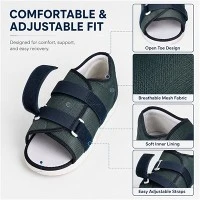
Regardless of the type of internal fixation surgery, it is important to closely monitor the movement sensation and changes in blood supply of the limbs before and after the surgery. For patients undergoing anterior spinal fixation through the thoracic cavity, a closed drainage tube is used after surgery. In addition to routine care, patients should be regularly observed for chest tightness, shortness of breath, and other symptoms, and attention should be paid to the drainage volume and color of the drainage fluid (the same measures should be taken for abdominal negative pressure suction). The impact of the development of minimally invasive orthopedics on orthopedic nursing. In recent years, minimally invasive orthopedics has experienced rapid development. Arthroscopy, which emerged in the 1980s, has now developed into a relatively mature minimally invasive orthopedic technique, such as percutaneous intervertebral disc fenestration and discectomy, thoracoscopy or laparoscopy for spinal scoliosis correction and internal fixation, or biopsy for the removal of lesions such as spinal tuberculosis and tumors [3]. And the corresponding endoscopic techniques require corresponding adjustments in nursing work. 2.1 Generally, body hair scraping is not performed before surgery. Due to the small surgical incision and low risk of infection caused by endoscopic techniques, existing literature reports that removing body hair one day before surgery can easily result in small incisions. In these small incisions, bacteria are likely to remain, increasing the chance of infection. So now the concept of preoperative skin preparation should be changed. It is not necessary to routinely scrape off body hair. If skin preparation is necessary, it can be done in the operating room, and only the body hair around the surgical incision needs to be scraped off. 2.2 Due to the minimal surgical trauma and rapid recovery of patients, bed rest time is often shortened from one week after surgery to the day after surgery when they can get out of bed. Therefore, guiding and encouraging patients to engage in rehabilitation exercises is an important aspect of preoperative and postoperative care. For example, in patients undergoing arthroscopic allogeneic tendon transplantation to repair anterior cruciate ligament injuries in the knee joint, preoperative teaching of quadriceps muscle function exercise is crucial for early recovery of joint stability, reduction of "soft leg" injuries, and restoration of normal tension of the transplanted tendon. Patients can start exercising on the second day after surgery. For patients undergoing laminectomy and nucleus pulposus removal with cervical discoscopy, the correct posture for getting in and out of bed should be taught before surgery, and patients can be encouraged to get out of bed for exercise on the second day after surgery. 2.3 Minimally invasive techniques are usually performed under a monitor, and in addition to special surgical instruments, they often consist of complex and sophisticated optical photography systems and image acquisition systems. So, the familiarity of surgical nurses with the system is particularly important. Good maintenance of these systems is also essential. Although minimally invasive orthopedic surgery has minimal trauma, it can also lead to some significant complications. For example, arthroscopic surgery can easily cause damage to the popliteal artery, while thoracoscopic surgery can easily lead to pneumothorax, etc. [4]. Therefore, postoperative observation is very important, such as paying attention to changes in the patient's vital signs, blood flow and sensory movements in the lower limbs, and the occurrence of symptoms such as palpitations and shortness of breath. The development of braces has had an impact on orthopedic rehabilitation nursing. Brace therapy has been around for a long time and is sometimes used as the main conservative treatment method, such as brace therapy for congenital hip dislocation. Most of the time, it is used as an adjuvant therapy after surgery. Due to the influence of brace materials and techniques in the past, brace treatment has not received much attention. In recent years, with the development of materials and techniques, the use of braces for treatment has become increasingly common [3]. 3.1 Support therapy has gradually shifted from simple basic nursing to rehabilitation nursing, posing new requirements for nursing. For patients with radial nerve injury in hand surgery, using hand functional braces to maintain joint function can not only prevent wrist and finger deformities, but also exercise the muscle strength of the patient's hands and prevent muscle atrophy. So, nurses not only need to be familiar with the function of braces, but also guide patients to undergo correct functional rehabilitation exercises.
3.2 Support therapy makes postoperative patient care more convenient, such as for patients with cervical atlantoaxial dislocation. In the past, treatment usually involved continuing skull traction after surgery until suture removal, followed by head and chest plaster fixation. The patient has been bedridden for a long time, and the scheduled turning over makes nursing extremely inconvenient. After using the halo vest (head chest brace), patients can get up and walk without the need for bed traction, which shortens bed rest time and greatly reduces nursing workload. 3.3 There are many joints in braces, and observing braces is a very meticulous task. If one of them becomes loose and is not treated in a timely manner, it will lead to the failure of the entire treatment. With the further development of new orthopedic technologies, orthopedic nursing work will face challenges from new concepts and technologies. Continuous learning, keeping up with the development of new medical technologies, and continuously improving nursing work on the basis of mastering basic nursing are the top priorities for nursing workers.