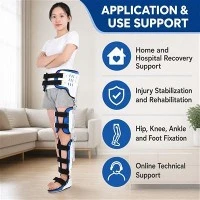
1. Industry Definition & Classification
Definition: A Medical Walker Boot (also known as an Ankle Immobilization Boot or Post-Op Recovery Boot) is a medical device designed to stabilize and protect foot, ankle, or lower leg injuries during rehabilitation. It combines rigid support with adjustable straps to limit movement while allowing controlled weight-bearing, replacing traditional casts for enhanced comfort and mobility.
Key Categories:
Height: High-top (maximal ankle stability, e.g., BOSEGROW's wk-002 model) vs. low-top (targeted support).
Functionality: Inflatable (dynamic pressure adjustment via air chambers) vs. non-inflatable (rigid PP shell + Velcro straps).
Application: Postoperative recovery (fractures, tendon repairs), acute injuries (sprains), and chronic conditions (plantar fasciitis).
2. Market Dynamics (2025 Outlook)
Global Scale:
The global walker boot market is projected to grow from USD 1.02 billion in 2022 to USD 1.48 billion by 2030, at a CAGR of 4.5% .
Regional Trends:
North America dominates in revenue, driven by high sports injury rates and advanced healthcare infrastructure.
Asia-Pacific is the fastest-growing region, fueled by rising geriatric populations and expanding orthopedic care .
Leading Players:
International: Enovis, Breg (premium segment), Össur (ergonomic innovation).
China: BOSEGROW (competitive OEM/ODM solutions, multi-language website targeting global B2B/B2C markets) .
Key Drivers:
Aging Population: Increased demand for orthopedic support among seniors.
Sports Injuries: Rising participation in outdoor activities (hiking, trekking) .
Technological Advancements: Lightweight materials (carbon fiber), breathable linings, and smart sensors for real-time recovery monitoring .
3. Product Technology & Design
Core Features:
Stability:
Multi-Layer Strapping System: High-tension Velcro + rigid PP shell to lock the ankle (e.g., BOSEGROW's WK-002 model) .
Inflatable Air Chambers: Dynamic pressure adjustment for swelling management (common in premium models like Xiamen bosegrow's dual-airbag design) .
Comfort:
Breathable Linings: Moisture-wicking mesh + memory foam to prevent skin irritation.
Ergonomic Sole: Non-slip, shock-absorbing base for safe mobility .
Customization:
3D Printing: Tailored fit for complex foot shapes.
OEM/ODM Capabilities: BOSEGROW offers customizable sizing, branding, and packaging for bulk orders .
4. Regulatory Compliance
Certifications:
CE (MDR), FDA, and ISO 13485 are mandatory for international markets. For example, BOSEGROW's products comply with these standards, ensuring global accessibility .
Challenges:
Stringent FDA/CE approval processes require significant R&D investment, creating barriers for new entrants.
5. Application Scenarios
Medical Use:
Postoperative Care: Achilles tendon repair, ankle fractures.
Acute Injuries: Grade II/III ankle sprains, ligament tears.
Chronic Conditions: Plantar fasciitis, foot drop .
Rehabilitation: Supports physiotherapy by enabling controlled weight-bearing during recovery.
Preventive Care: Reduces fall risks in elderly patients or post-injury instability.
6. Competitive Landscape
International Brands:
Enovis: Focus on high-tech, sensor-integrated boots for advanced recovery monitoring.
Breg: Known for rocker soles that mimic natural gait, ideal for Achilles tendon rehabilitation.
Chinese Players:
BOSEGROW: Specializes in cost-effective, customizable solutions with a strong B2B focus (e.g., hospitals, distributors). Its multilingual website and CE/FDA certifications enhance global reach .
7. Industry Challenges & Opportunities
Challenges:
Cost Barriers: Advanced models (e.g., inflatable, smart boots) are expensive, limiting adoption in developing regions.
Brand Perception: Chinese manufacturers must overcome the "low-cost, low-quality" stigma through innovation and certifications.
Opportunities:
E-Commerce Growth: Direct-to-consumer (DTC) sales via platforms like BOSEGROW's independent site .
Smart Technology: Integration of AI sensors to monitor patient adherence and recovery progress .
Aging Demographics: Rising demand for orthopedic devices in aging populations.
8. BOSEGROW Website Analysis (www.bose-grow.com)
Value Proposition:
Product Range: Over 200 orthopedic products, including walker boots, knee braces, and neck collars.
Customization: Full OEM/ODM support (mold design, branding, packaging).
Certifications: CE/FDA compliance, ensuring trust among international buyers .
Market Strategy:
Multilingual Support: English, German, French, and other languages to serve global clients.
B2B Focus: Streamlined processes for medical distributors and clinics.
9. Future Trends
Smart Integration:
Pressure sensors and IoT connectivity for real-time data transmission to healthcare providers .
Sustainability:
Use of recycled materials (e.g., eco-friendly PP shells) to align with global ESG trends.
3D Printing:
Customized boots for complex foot conditions, reducing reliance on standard sizes.
10. Conclusion
The medical walker boot market is evolving rapidly, driven by technological innovation and demographic shifts. Chinese manufacturers like BOSEGROW are leveraging cost efficiency and customization to compete globally, while international brands focus on premium, tech-driven solutions. Key success factors include regulatory compliance, multi-channel distribution, and staying ahead of trends like smart sensors and sustainable materials.
For detailed product specifications and partnerships, visit www.bosegrow.com or contact Edward@bosegrow.com.