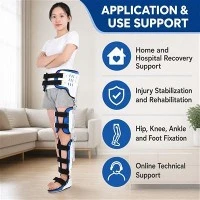
Instructions for using external fixing brackets

1, Product Introduction
External fixation bracket is a medical device used for fixing fractures or joint surgeries, consisting of a bracket, fixing steel needles, connecting rods, and other components. External fixation brackets can provide strong support and fixation functions, which help with fracture healing and stability of the surgical site. The external fixation bracket can also adjust and correct the surgical site through the adjustment of the connecting rod, providing patients with a reasonable treatment plan.
2, Notice before use
1. Choose a suitable external fixation bracket: The model and specifications of the external fixation bracket should be selected according to the specific situation of the patient and the surgical site, and should not be used arbitrarily.
2. Preoperative investigation: Before using the external fixator, it is necessary to conduct sufficient preoperative investigation and assessment of the patient's fracture or surgical site to understand the fracture type, fracture degree and surrounding tissues.
3. Strict disinfection: The external fixation bracket belongs to medical devices and requires strict disinfection treatment before use to ensure the cleanliness and sterility of the device.
3, Usage steps
1. Positioning: After determining the surgical site, use appropriate methods for positioning to ensure accurate fixation of the external fixation bracket.
2. Installing bracket: Install the bracket correctly along the surgical site to ensure that the position of the bracket is reasonable and the position of the fixed steel needle is accurate.
3. Adjustment of connecting rods: According to the needs of the surgical site, the adjustment of connecting rods can effectively correct and adjust the surgical site, ensuring its stability and healing.
4. Fixed bracket: Fix the external fixed bracket firmly to avoid movement and loosening of the bracket, ensuring its stability.
5. Regular inspection: During the use of external fixed brackets, it is necessary to regularly inspect the brackets to ensure their fixation and stability.
4, Precautions
1. Professional operation: The installation and adjustment of external fixation brackets need to be carried out by professional medical personnel, and patients are not allowed to operate or adjust them privately.
2. Patient cooperation: During the use of external fixation brackets, patients need to patiently cooperate with the arrangements and guidance of medical personnel to ensure the stability and healing of the surgical site.
3. Regular follow-up visits: During the use of external fixation brackets, patients need to follow the doctor's advice for regular follow-up visits, receive doctor's examination and guidance, and promptly identify and handle problems.
4. Abnormal situation: If abnormal situations occur during the use of external fixation brackets, such as loosening or displacement of the brackets, patients should seek medical attention in a timely manner to avoid adverse consequences.
5, End of use
1. Doctor's guidance: The service life of external fixation brackets should be guided and decided by professional doctors based on the actual situation of patients, and patients are not allowed to end their use without authorization.
2. Safe disassembly: Under the guidance of a doctor, the external fixation bracket needs to be safely disassembled to avoid unnecessary damage to the surgical site.
3. Rehabilitation training: After removing the external fixation bracket, patients need to undergo appropriate rehabilitation training and activities to promote the recovery of the surgical site and functional recovery.
6, Conclusion
External fixation stent is an important medical device that plays a crucial role in fracture fixation and surgical treatment. In the process of using external fixation brackets, the joint cooperation and efforts of patients and medical personnel are required to ensure stable healing of the surgical site and patient recovery. I hope to provide patients with a better treatment experience and effectiveness through correct use and operation.