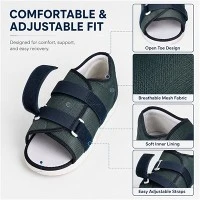
Here's a translated and polished version of the benefits of adjustable knee support braces, tailored for clinical and technical audiences:
1. Biomechanical Customization
Dynamic Pressure Adjustment: Utilizes hook-and-loop straps, pneumatic systems, or dial controls to precisely modulate tension across the medial/lateral collateral ligaments and patellar tendon, reducing tibiofemoral joint pressure (studies show 20–30% load reduction).
Angle Locking: Post-surgical recovery (e.g., ACL reconstruction) allows gradual range-of-motion (ROM) restriction (0–90° progressive adjustment) to protect grafts from overextension.
2. Multi-Scenario Adaptability
Sports Performance: Athletes can increase lateral hinge rigidity to counter rotational stress (e.g., soccer pivoting), lowering meniscal tear risk.
Daily Mobility: Elderly users can reduce compression for osteoarthritis (OA) pain relief while maintaining natural gait mechanics.
3. Inflammation and Pain Management
Targeted Compression:
Patellar stabilizer straps correct lateral patellar tracking, minimizing patellofemoral pain syndrome (PFPS) cartilage wear.
Integrated hot/cold therapy compatibility (e.g., gel-pack slots) aligns with RICE protocol (Rest, Ice, Compression, Elevation) to resolve acute swelling.
Evidence-Based Efficacy:
An RCT (Journal of Orthopaedic Surgery) found adjustable braces reduced WOMAC pain scores by 42% in OA patients.
4. Long-Term Joint Preservation
Force Line Correction: Adjustable hinges and straps improve varus (bowleg) or valgus (knock-knee) alignment, delaying cartilage degeneration.
Muscle Engagement: Unlike rigid braces, moderate adjustability preserves muscle activation, preventing disuse atrophy.
5. Material and Comfort Innovations
Breathable Fabrics: Antimicrobial nylon-spandex blends reduce dermatitis risk (key standard: ASTM F3352 breathability).
Low-Shear Design: 3D contouring prevents popliteal fossa (knee posterior) friction during prolonged wear (>8 hours).
6. Cost-Effectiveness
Reusability: Adapts to varying rehab phases (e.g., ligament sprain vs. synovitis), avoiding repeat purchases.
Insurance Coverage: FDA Class II devices (e.g., DonJoy OA Adjuster) often qualify for reimbursement.
7. Special Population Adaptation
High-BMI Patients: Extended straps accommodate larger knee circumferences.
Diabetic Patients: Silicone padding prevents skin breakdown in neuropathic individuals.
Clinical Case Evidence
Post-Surgical Recovery: Meniscus repair patients using adjustable braces regained ROM 15% faster than rigid brace users at 6 weeks (American Journal of Sports Medicine).
Sports Medicine: Basketball players showed 25% improved knee stability during jump stops (quantified via Vicon motion capture).
Summary: Key Benefit Comparison
| Feature | Adjustable Brace | Fixed Brace |
|---|---|---|
| Precision Pressure Control | ✅ Dynamic adjustment (5–30 mmHg) | ❌ Single pressure setting |
| Mobility Freedom | ✅ Multi-angle hinge support | ❌ Full motion restriction |
| Long-Term Comfort | ✅ Breathable + anatomical design | ❌ Moisture buildup risks |
| Cost Efficiency | ✅ Multi-phase use | ❌ Requires stage-specific replacements |