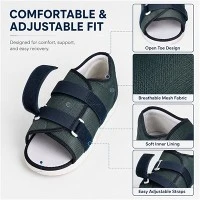
The difference between an ankle support and an ankle brace lies in their design, purpose, and level of restriction. Here's a structured breakdown:
1. Definitions
Ankle Support:
A device designed to provide mild stability, compression, and proprioceptive feedback. Typically used for prevention of injuries or management of minor instability.
Ankle Brace:
A more rigid, structured device intended to restrict harmful movements (e.g., inversion/eversion) and support recovery from moderate to severe injuries (e.g., sprains, fractures).
2. Structural Differences
| Feature | Ankle Support | Ankle Brace |
|---|---|---|
| Material | Elastic fabrics (neoprene, nylon), foam. | Rigid components (plastic, metal hinges, straps). |
| Mobility | Allows full/near-full range of motion. | Limits specific movements (e.g., side-to-side). |
| Adjustability | Minimal (pull-on sleeves, elastic bands). | Customizable straps, laces, or hinges. |
3. Purpose & Use Cases
| Scenario | Ankle Support | Ankle Brace |
|---|---|---|
| Prevention | Worn during sports to reduce sprain risk. | Rarely used prophylactically; reserved for high-risk cases. |
| Mild Injury | Manages minor pain/swelling (e.g., Grade 1 sprain). | Not typically needed. |
| Moderate/Severe Injury | Insufficient for stabilization. | Critical for post-injury immobilization (e.g., Grade 2/3 sprains, post-op recovery). |
| Chronic Conditions | Provides comfort for arthritis or instability. | Used for structural instability (e.g., ligament laxity). |
4. Medical Recommendations
Ankle Support:
Over-the-counter, non-prescription.
Ideal for athletes, hikers, or individuals with mild instability.
Examples: Elastic sleeves, lace-up wraps.
Ankle Brace:
Often prescribed by healthcare providers.
Used during rehab to protect healing tissues.
Examples: Stirrup braces, hinged braces, rigid orthotics.
5. Key Differences Summary
| Aspect | Ankle Support | Ankle Brace |
|---|---|---|
| Restriction | Mild compression; minimal movement limits. | Significant restriction of harmful motions. |
| Duration of Use | Long-term (prevention, daily activities). | Short-term (recovery phases, 2–6 weeks). |
| Cost | Affordable (10–50). | Higher cost (30–200+). |
| Dependency Risk | Low (muscles remain active). | Higher (prolonged use may weaken muscles). |
When to Choose Which?
Choose a Support If:
Preventing rolls/sprains during sports.
Managing minor swelling or stiffness.
Choose a Brace If:
Recovering from a significant injury (e.g., torn ligaments).
Experiencing chronic instability unresponsive to supports.