Application of knee joint braces in joint rehabilitation
Braces, also known as orthotics, are an important achievement in clinical research of modern sports trauma surgery and one of the core technologies of bone and joint rehabilitation treatment. With the development of modern rehabilitation medicine, the demand for braces is increasing day by day. According to data, due to the application of new materials and processes in recent years, brace technology has made significant progress and has become the main external support device for prevention, treatment, and rehabilitation in sports trauma surgery and joint surgery in Europe and the United States. However, due to the lack of widespread integration of brace research, design, assembly, and clinical medical work in China over the years, medical and rehabilitation workers have insufficient understanding of the importance and necessity of braces in medical work, and are not familiar with the design principles, usage methods, and application fields of braces. As a result, the application of this new technology in domestic medical work has been limited to a certain extent. This article takes the application of knee joint braces as an example, hoping to stimulate the attention of orthopedic surgeons, rehabilitation physicians, and brace technicians to the application of braces, and fully play the role of braces in the prevention, treatment, and rehabilitation of sports trauma surgery
In 1984, AAOS classified knee joint braces into three categories: 1 Prophylactic Braces, 2. Rehabilitation Braces, 3. Functional Braces
Preventive brace: The lateral compression brace is placed on the outer side of the knee joint to provide protection when the medial collateral ligament is subjected to eversion stress and the cruciate ligament is subjected to rotational stress Mainly used to prevent or reduce the severity of knee joint injuries. This brace is most commonly used by rugby players and is worn during exercise, greatly reducing the incidence of MCL injuries
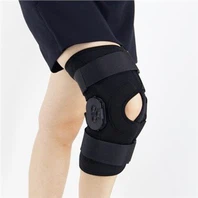
Rehabilitation brace: worn during the rehabilitation process of joints after trauma or surgery, mainly to protect and control joint movement, limit joint range of motion. It needs to be worn for 24 hours and usually maintained for 6-8 weeks
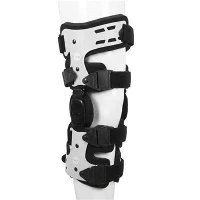
Functional brace: provides or increases stability for unstable joints. It only needs to be worn during activity or movement